

Overview
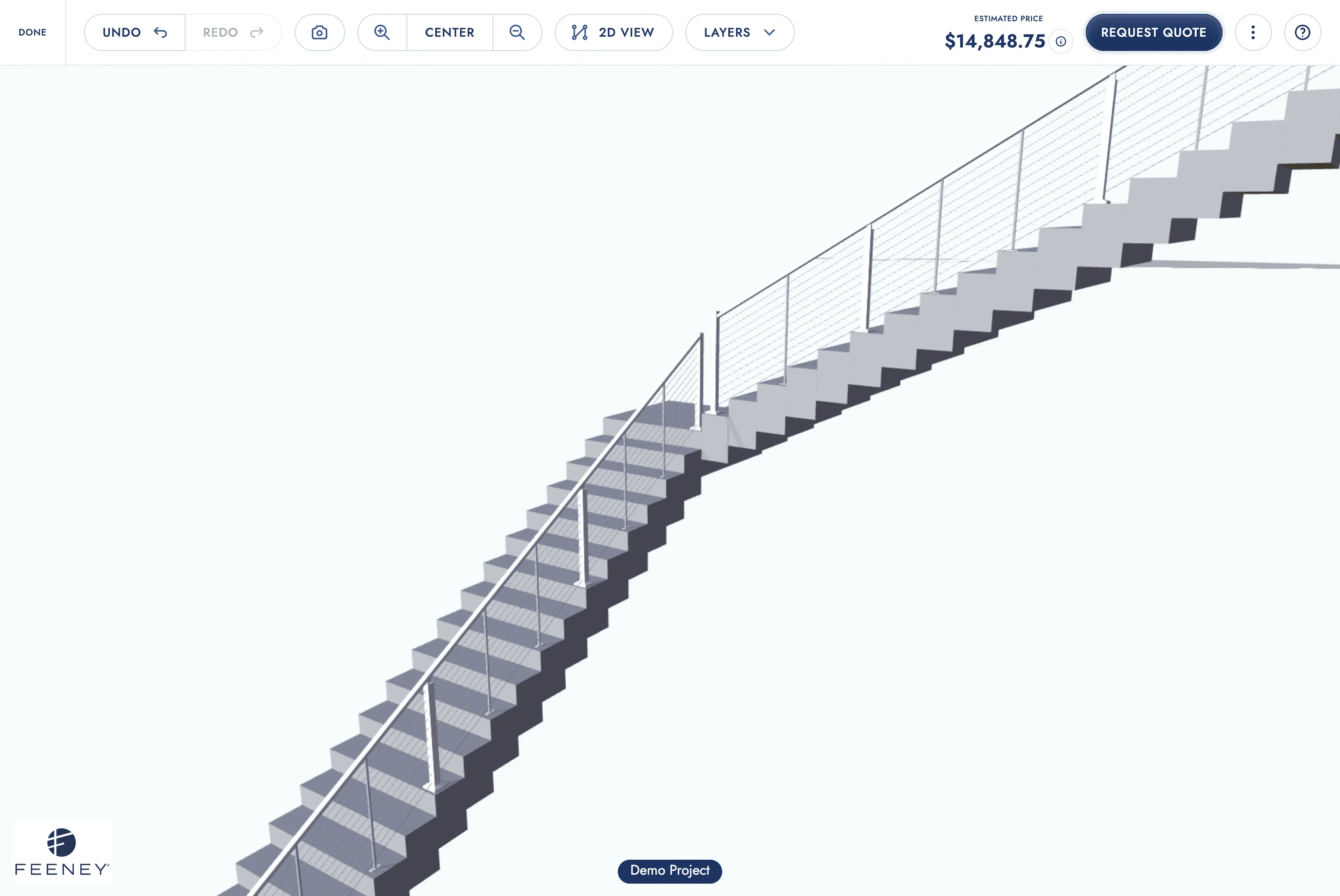
Feeney manufactures railing systems, with cable railing at the center of its product line for higher-end residential and commercial builds. Long before RoleModel got involved, Feeney had invested years and real money into a 3D visual configuration tool, one that worked, that looked good, and that dealers and customers found compelling.
But the tool stopped at the picture. It couldn't tell a dealer what to order. Someone on Feeney's team had to review the rendering, work out the bill of materials (BOMs) by hand, and then check whether the design a customer wanted could actually be installed. Cable railing carries real engineering constraints: how long a run can go before it needs a break, which posts have to sit in which spots. Looking right and being buildable aren't the same thing. Those installation rules lived in Feeney's engineers' heads, not in the software. Feeney wanted its dealer network, the people actually specifying and installing these systems, to design and sell without waiting on that manual translation step.
Solution Process Explained
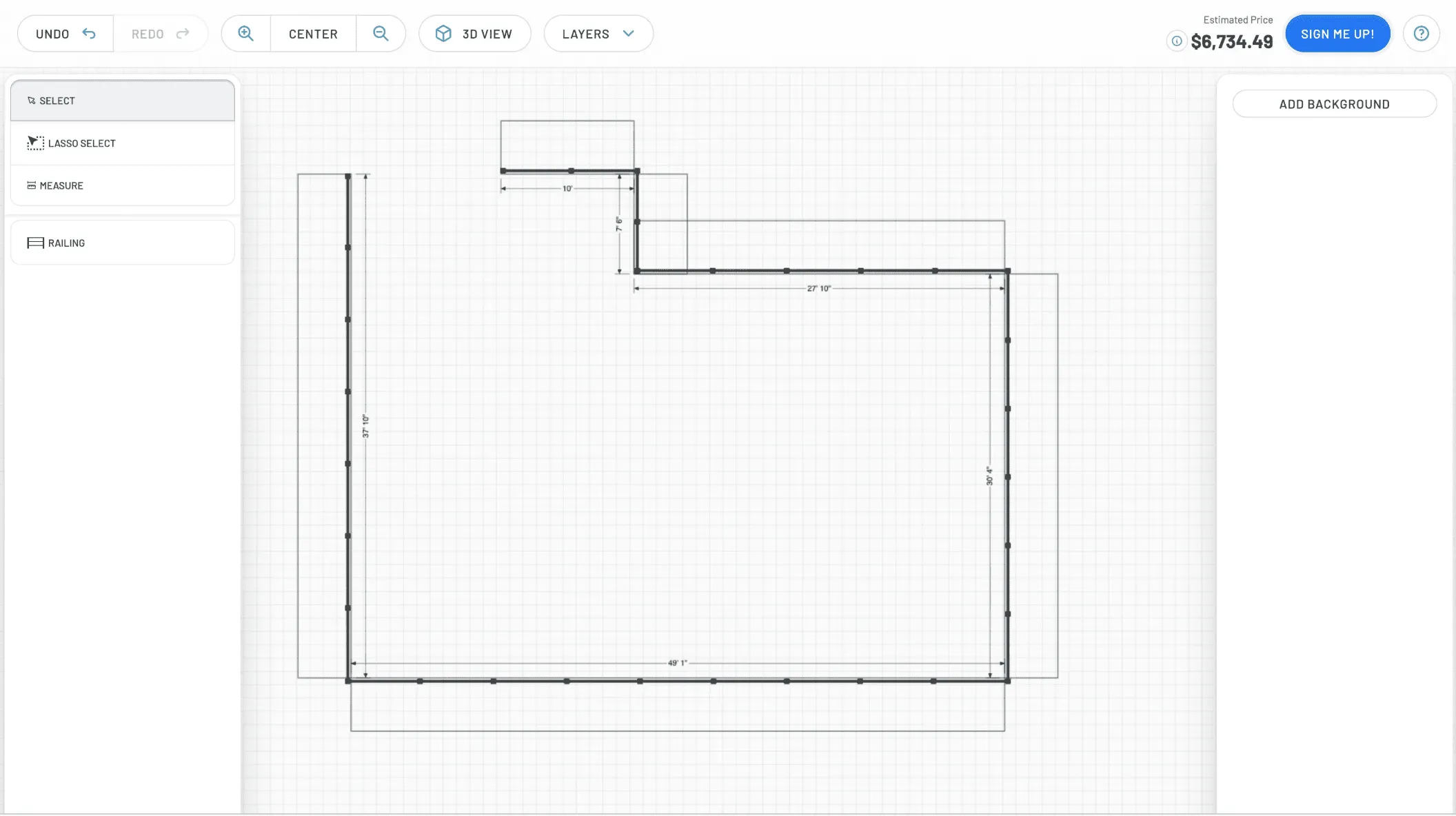
Feeney's dealer network needed a design tool that carried a project from layout to order in one pass. Working alongside Feeney's team, RoleModel built their system on RoleModel’s Railing Designer platform. They can draw the run the way they'd naturally think about a railing job, and the tool checks that layout as it's drawn, swapping in the post types and configurations the design actually requires without the estimator needing to know why. What comes out the other end is a bill of materials and a price.
The tool also handles the details a dealer might otherwise miss: default quantities for consumables like touch-up paint or cable cutters ship with every order unless a dealer overrides them. And the interface carries Feeney's own brand colors and fonts, a small detail, but one that ensures brand consistency throughout the sales process.
What separates this from Feeney's original visualizer isn't the rendering. It's that the rules governing what can physically be installed are built into the algorithm driving the design, not left for someone to catch after the fact. That's Feeney's own engineering knowledge, encoded into software its dealer network can use without being engineers themselves. The result is a faster estimate, delivered with confidence that what's quoted can be built exactly as shown.
That's the shift Feeney was after: a dealer network that can move from a customer's idea to a buildable, priced order without leaning on Feeney's own team to catch what a drawing missed.

SHARE CASE STUDY
Ready to customize your Railing Designer?
Find a time to talk with us today!